
Overwatch Competitive Ranks: Champion, Stadium Leagues and Drives (2026)
| Tags: Overwatch
| Author Paul G
November 2026 update: a rank above Grand Master, and a second ladder
Blizzard changed the top of the ladder, added a separate ranked mode and now runs scoring events on top of Competitive Play. The Season 10 ranks below still carry the right tier names up to Grand Master. Their division thresholds were not checked again for this update.
| Change | What Blizzard published |
|---|---|
| Champion rank | Season 9 introduced Champion, described as a prestigious new rank above Grand Master |
| Soft reset and placements | Season 9 soft reset every rank and brought placement games back. Blizzard says performance in them substantially influences your starting rank |
| Competitive Overview | A rank summary with skill modifiers appears after each match |
| Current season | Reign of Talon, Season 5: A Grim Doctrine, which began on October 6, 2026 |
| Stadium | A separate ranked mode, seven Leagues of five divisions each, tracked per role |
Stadium runs on Leagues rather than tiers. Blizzard names Rookie, Novice, Contender, Elite, Pro and All-Star in its article on climbing those ranks, with Legend in the heading, and the ordered ladder itself appears only in an image. There are no placement matches. Every player starts at the bottom of Rookie and climbs by winning. Rookie and Novice never cost you points. Contender and Elite take a small amount per defeat and can send you back to Novice. From Pro upward, a loss costs roughly what a win pays. Ranks reset at the end of each season, and nothing restricts who you group with.
Competitive Drives sit on top of the normal ladder for a few days at a time. Competitive matches fill a Drive Meter with Drive Score, and the two sides are not symmetrical: a win adds ten times the Skill Rank percentage you gained, while a loss removes five times the percentage you lost. A checkpoint you clear cannot be lost afterward. The first Drive ran from October 4 to October 7.
| Checkpoint | Drive Score | Reward |
|---|---|---|
| Tier 1 | 300 | 500 Competitive Points |
| Tier 2 | 700 | Signature |
| Tier 3 | 1,200 | 1,000 Competitive Points |
| Tier 4 | 1,700 | Advanced Signature |
| Tier 5 | 2,200 | 1,500 Competitive Points |
| Tier 6 | 2,700 | Elite Signature |
Not re-checked here: the division thresholds, the 50 Quick Play wins requirement, the Top 500 rules and the Challenger entry, all of which come from the 2024 version of this guide.
From Bronze to Top 500, we go through all Overwatch 2 competitive ranks, and what it takes to climb the Season 10 ladder.
Overwatch 2’s competitive rework gave us plenty to look at going into Season 10. An all-new rank progression tracker was added to the game, the devs revealed additional information on what went into a rank promotion, and every hero got a sizeable health buff.
Hundreds of thousands of players still log into Blizzard’s team shooter to climb the revamped competitive ladder. And here, we’re taking determines the best players in Season 10: Ranks.
Overwatch Competitive Ranks
Players must win 50 Quick Play matches to start playing Competitive mode in Overwatch 2.
From there, you play 10 placement matches. Your performance in these games will gauge your skill level and — along with your internal matchmaking rating (or “MMR”) — decide your rank.
Rank progression points that you get/lose depend on 8 factors:

Overwatch 2’s system splits each competitive rank into 5 divisions, with 1 as the highest. Players who rank up from division 1 get promoted to the next tier (ie. Silver I > Gold V).
Top 500 players are an exception to the rule. These players are the highest-rated players across the every major region, so the title can be rewarded regardless of tier or skill division. Overwatch 2 players need 50 competitive wins after 2 weeks of a season start to place in the Top 500.
How many Overwatch 2 competitive ranks are there? What sets them apart, and how easy is it to rank up in Season 10? We answer all of this and more in our Overwatch 2 Competitive ranks guide below!
Bronze Rank

Where everyone starts.
Bronze players make up a moderate percentage of players, making it easy to rank up early on. At the same time, it’s also the best place to start practicing strong heroes in the seasonal meta.
You’re only given one rank for Competitive Open Queue. But in Role Queue, you’re given three (one for each role).
Silver Rank

Moderately-skilled players who want to take Competitive seriously often land on a Silver division after placements. Silver players have a favorite playstyle and specific set of heroes they stick with.
If you don’t already have a 5-man team, expect a lot of player variety when you group up with randos in a Silver lobby.
Gold Rank

The real challenge starts here. Overwatch 2 Competitive ranks count Gold as THE toughest tier to rank up from, making it the closest thing to an OW2 “elo hell”.
Gold players pay closer attention to their group macro, have good positioning skills and often play the strongest heroes of the season, in every map. That said, it’s not that hard to get here if you only use the best heroes of the season.
Platinum Rank

Above-average Overwatch 2 players make it to Platinum by playing the meta, having a wide range of heroes in their pocket and knowing how to counter them.
According to the Fandom wiki, 26.2% of all Overwatch 2 players are Platinum rank. From here, there’s a sharp drop to account for the crazy good players that make it to Diamond.
Diamond Rank

Less than a 5th of all Overwatch 2 Competitive players ever make it to Diamond.
The first of the “elite” tiers, Diamond lobby players are highly-consistent gamers that play any hero regardless of the meta. High-profile streamers and small-time esports pros alike are usually Diamond rank, if not better.
Master Rank

High-tier Overwatch 2 Competitive starts here.
Most Top 500 players come from Master and Grandmaster, so consider yourself an elite Overwatch 2 player when you reach this level of Competitive play. The gap between Diamond and Master is massive, so only the most dedicated heroes make it this far.
At this point, playing in a group is almost a requirement.
Grandmaster Rank

What was once the highest tier of Overwatch 2 Competitive ranks is still a mighty accomplishment. Grandmaster players are among the best in the scene, and display incredible acuity in every game.
Grandmaster players almost always go up against professional players in their lobbies. However, competitive players now have a new zenith to aspire to.
Challenger Rank

The Challenger rank was added in Season 10 and is the highest normal rank you can grind for in Overwatch 2 Competitive mode.
Only the best of the best make it to the top. Less than 2% of the global playerbase. Talent, dedication and sheer will are all a given when it comes to this level of play.
Top 500 Rank

The top 500 from 3 major regions, The Americas, Asia and Europe respectfully; 1% of the 1%.
Well-known personalities and the best esports contenders are among the Top 500 globally. If you’ve ever seen an Overwatch 2 montage, you’ve likely seen a Top 500 player.
For the latest esports news, follow ESTNN.
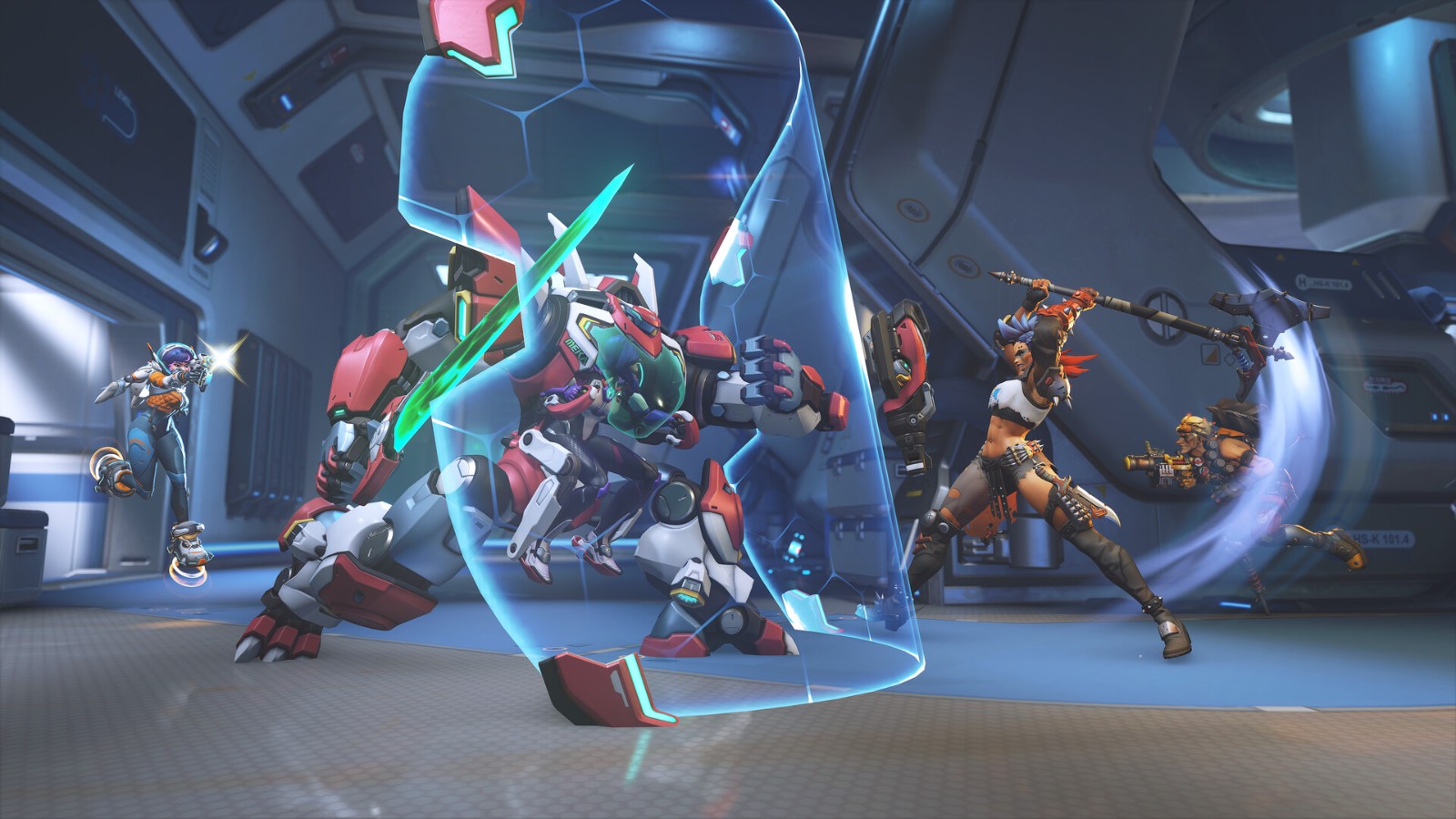
Image: Blizzard Entertainment / Steam.

Paul started writing game guides and match predictions for ESTNN editorial team in 2022. Since then, he is covered big-ticket esports events and the latest news on tech and AI.